
The Chef's Kitchen Has a Secret: Luxury Kitchens in Albuquerque
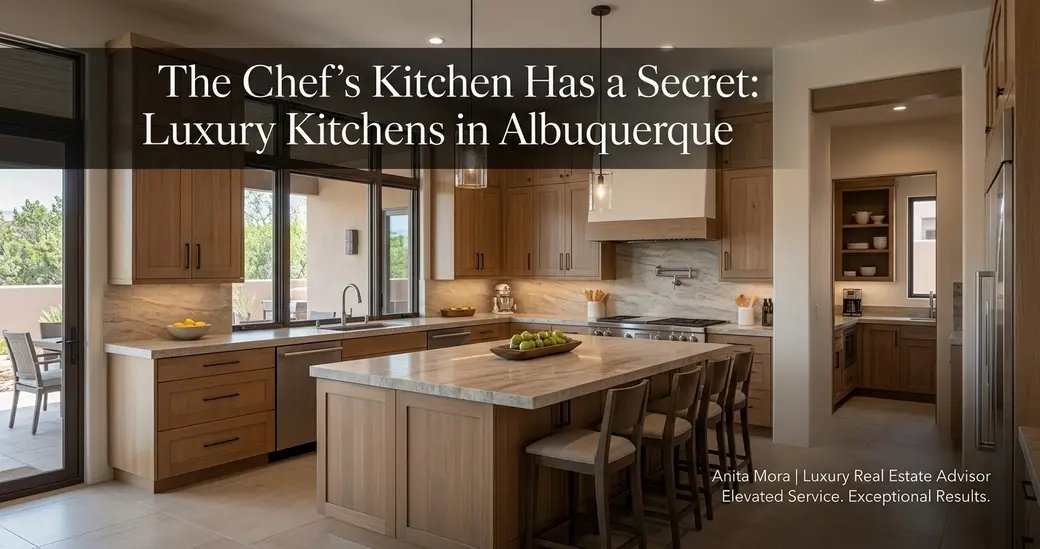
The most beautiful kitchen in a luxury home is not always the one that works best.
A dramatic island, custom cabinetry, stone countertops, professional appliances, and statement lighting can create a memorable kitchen. But many high-end homeowners are also interested in something less visible: a secondary space that keeps everyday preparation, appliances, and mess out of sight.
That is where the modern luxury kitchen gets interesting.
Hidden prep kitchens, sculleries, butler's pantries, appliance garages, and carefully planned storage are changing how luxury kitchens function. The goal is not simply to make the kitchen look impressive. It is to allow the kitchen to work beautifully when the homeowner is cooking, entertaining, or simply living normally.
The Rise of the Hidden Prep Kitchen
A prep kitchen is typically positioned behind or adjacent to the primary kitchen.
It may contain additional counter space, a sink, refrigeration, cooking appliances, storage, or other equipment used for food preparation.
During a dinner party, the main kitchen can remain visually clean while much of the preparation happens elsewhere.
For homeowners who entertain regularly, this can be a meaningful functional advantage.
What Is a Scullery?
The term "scullery" can describe a secondary kitchen or utility space used for food preparation, cleanup, and storage.
Modern sculleries vary considerably. Some are compact working spaces, while others resemble fully equipped secondary kitchens.
The value is largely in separation.
The primary kitchen remains the social center of the home while less presentable tasks happen nearby but out of view.
Butler's Pantries Are About Organization
A butler's pantry can provide additional storage and serving space between the kitchen and dining or entertaining areas.
Custom cabinetry can house serving pieces, glassware, small appliances, pantry goods, and other items that might otherwise clutter the main kitchen.
In a luxury home, organization can be just as important as visual design.
Appliance Garages Hide Everyday Clutter
Small appliances are useful but can quickly dominate countertops.
Appliance garages provide dedicated spaces for coffee makers, mixers, toasters, blenders, and other equipment.
The best designs consider how appliances are actually used. Easy access matters. So does electrical planning.
A beautiful cabinet that makes everyday appliances difficult to reach is not necessarily a successful solution.
The Island Has Become Multifunctional
The oversized island continues to play several roles.
It may function as a food-preparation surface, breakfast counter, gathering space, serving area, homework station, or informal workspace.
Its size should therefore be considered in relation to circulation.
Bigger is not automatically better. A well-designed island should allow people to move comfortably around it while maintaining practical distances between cooking, refrigeration, cleanup, and storage areas.
Kitchens Are Designed for Entertaining and Everyday Life
One of the most interesting changes in luxury kitchen design is the recognition that entertaining and daily cooking are different activities.
A homeowner may want a beautiful central kitchen for conversation and family life while also needing serious prep capacity behind the scenes.
This creates a kitchen that can look polished without sacrificing functionality.
Materials Still Matter
High-quality cabinetry, natural stone, durable surfaces, quality hardware, appropriate lighting, and carefully executed installation can make a major difference.
But materials should be considered alongside maintenance.
A surface may photograph beautifully but require more upkeep than a homeowner wants. Luxury buyers should consider durability, cleaning, repair, and long-term appearance.
Albuquerque Kitchens Have Their Own Context
New Mexico architecture can lend itself beautifully to indoor-outdoor entertaining.
A kitchen opening toward a courtyard, covered patio, outdoor kitchen, or pool area can make the home's layout especially effective for gatherings.
In properties with Southwestern architectural influences, materials and details may also connect the kitchen to the broader character of the residence.
The individual home's architecture should guide the design rather than forcing a generic luxury look.
What Buyers Should Notice
During a luxury home tour, buyers should open cabinets, look at storage, observe appliance placement, check countertop workspace, and pay attention to circulation.
The kitchen should be evaluated both when it is perfectly staged and when imagined in everyday use.
Can two people cook comfortably? Is there enough storage? Where does dirty cookware go? Is there room for entertaining? Does the secondary prep area actually improve functionality?
Those questions reveal the difference between a beautiful kitchen and a truly useful one.
The Luxury Is in the Function
The modern luxury kitchen demonstrates an important shift in high-end residential design.
Luxury is increasingly about reducing friction.
A well-planned kitchen makes cooking easier, entertaining smoother, cleanup more organized, and daily routines more comfortable.
That is the kind of detail Anita Mora | Luxury Real Estate Advisor considers when helping clients understand luxury properties in Albuquerque. Beyond finishes and photographs, the layout and functionality of a home can have a lasting impact on how it is experienced.
Frequently Asked Questions
Question: What is the difference between a prep kitchen and a scullery?
Answer: The terms can overlap. Both generally describe a secondary work area supporting the main kitchen. A scullery may place greater emphasis on preparation, cleanup, and storage, while a prep kitchen often emphasizes cooking and food preparation.
Question: Are oversized kitchen islands practical?
Answer: They can be, provided the surrounding circulation and work zones are properly designed. An island that is too large for the room can interfere with movement.
Question: What should luxury buyers look for in a kitchen?
Answer: Buyers should evaluate layout, storage, appliance placement, countertop workspace, lighting, materials, ventilation, maintenance, and how naturally the kitchen connects to dining and outdoor areas.
CTA
For help evaluating luxury kitchens, floor plans, entertaining spaces, and overall property functionality in Albuquerque, contact Anita Mora | Luxury Real Estate Advisor at 505-400-8105.
Categories
Recent Posts





GET MORE INFORMATION