
How to Tell If an Albuquerque Home Is Priced Right
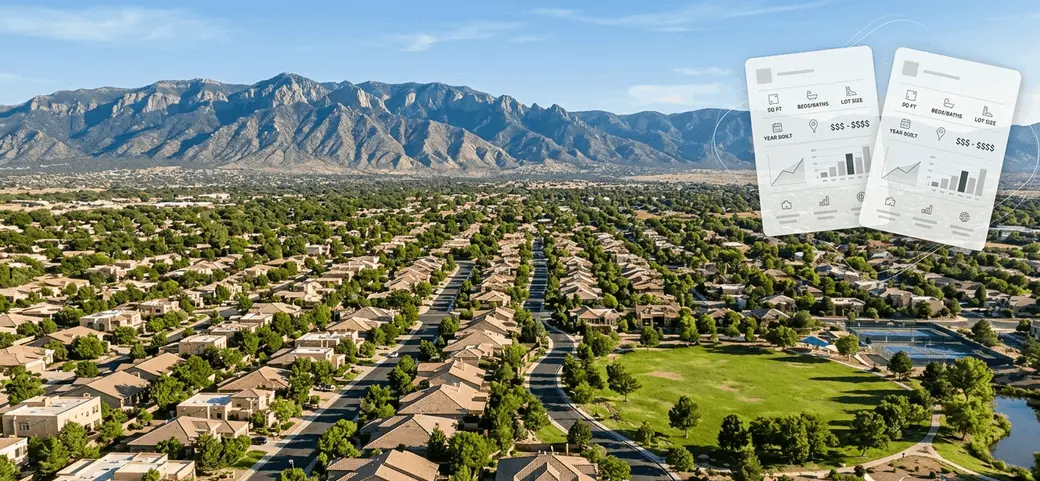
You've been looking at homes online for a while.
You finally find one that checks most of your boxes.
The location is good.
The floor plan works.
The backyard is the right size.
Maybe you even walk through it and think, "I could actually see myself living here."
Then you look at the price.
And suddenly, you're wondering:
"Is this home actually worth that much?"
That's a completely fair question.
One of the hardest parts of buying a home is figuring out whether the asking price reflects the property's actual value.
A home can look like a great deal online and turn out to need more work than you expected.
Another home might seem expensive at first glance, but after you understand the location, condition, upgrades, and recent sales nearby, the price may make much more sense.
The truth is, there isn't one simple formula for determining whether an Albuquerque home is priced right.
It's about looking at the bigger picture.
Here's how to start.
Start With Comparable Homes
One of the best ways to evaluate a home's price is to see what similar homes have recently sold for.
These are often called comparable sales, or "comps."
A good comparison might include homes that are similar in:
- Location
- Square footage
- Number of bedrooms
- Number of bathrooms
- Lot size
- Age
- Condition
- Features
- Overall style
For example, if you're looking at a 3-bedroom home in Northeast Albuquerque, you wouldn't necessarily compare it to a 5-bedroom property on a large lot in the Foothills.
The two homes may both be in Albuquerque, but they may attract completely different buyers and have very different values.
This is where local market knowledge becomes important.
Look Beyond the List Price
The list price is simply the seller's asking price.
It isn't automatically the home's market value.
A seller may price a home based on:
- Recent sales
- Advice from their Realtor
- The amount they need from the sale
- Improvements they've made
- What they believe their home is worth
- What they originally paid for the property
Some of those factors may be relevant.
Some may not.
Just because a seller spent $30,000 remodeling a kitchen doesn't necessarily mean the home's value increased by exactly $30,000.
And just because a seller needs to make a certain amount from the sale doesn't mean buyers will agree that the home is worth that price.
The market ultimately determines what buyers are willing to pay.
Pay Attention to How Long the Home Has Been on the Market
Days on market can provide useful clues.
If a home has been sitting for a long time while similar homes are selling, it may be worth asking why.
Maybe the home is overpriced.
Maybe it needs repairs.
Maybe the location is less desirable.
Maybe the home is unusual and appeals to a smaller group of buyers.
Or maybe the seller simply hasn't found the right buyer yet.
A longer time on the market doesn't automatically mean something is wrong.
But it is a reason to take a closer look.
On the other hand, a brand-new listing that is priced well and located in a desirable area may attract attention quickly.
That's why timing matters when you're evaluating a property.
Compare the Home to Its Competition
Imagine you're selling a product.
If your product costs more than similar products, customers are going to ask why.
Buyers do the same thing with homes.
If three similar homes are available nearby and one is significantly more expensive, you need to understand what makes it different.
Does it have:
- A better location?
- A larger lot?
- More upgrades?
- A better view?
- A newer roof?
- A more desirable floor plan?
- A finished outdoor space?
If the answer is no, the higher price may be harder to justify.
This is why looking at active listings is just as important as looking at recent sales.
Recent sales tell you what buyers have actually paid.
Current listings show you what buyers are comparing the home against today.
Location Can Make a Big Difference
Real estate is local.
Very local.
Two homes with nearly identical floor plans and square footage can have different values simply because they're in different locations.
When evaluating a home in Albuquerque, consider things like:
- Neighborhood
- Street location
- Proximity to major roads
- Access to shopping and restaurants
- Nearby parks
- Outdoor recreation
- Mountain or city views
- Lot position
- Traffic and noise
Even small differences can affect how buyers perceive a property.
A home on a quiet street may appeal differently than one on a busy road.
A property with easy access to the foothills may attract different buyers than one farther west.
Location isn't just about the ZIP code.
It's about the experience of living there.
Don't Ignore the Condition of the Home
A home that has been beautifully maintained may reasonably command a higher price than a similar home that needs significant work.
When you're comparing properties, look beyond the countertops and paint colors.
Consider the age and condition of:
- Roof
- HVAC system
- Windows
- Plumbing
- Electrical systems
- Water heater
- Appliances
- Stucco and exterior
- Flooring
A home that looks great in photos may still have expensive maintenance needs.
That's why a home inspection is so important.
You don't want to make a decision based solely on how the house looks during a 30-minute showing.
Remember That "Updated" Means Different Things
One of the words you'll see frequently in real estate listings is "updated."
But what does that actually mean?
For one seller, an updated kitchen may mean new cabinet hardware and fresh paint.
For another, it might mean a complete remodel with new cabinets, countertops, appliances, flooring, and lighting.
Don't assume that "updated" automatically means "fully renovated."
Look closely at what has actually been improved.
Ask questions.
Compare the home to others in the same price range.
The details matter.
Consider the Home's Price Per Square Foot—But Don't Rely on It Alone
Price per square foot can be a helpful tool when comparing similar properties.
But it shouldn't be the only factor you use.
A 2,000-square-foot home with an awkward layout isn't necessarily worth the same as a 2,000-square-foot home with a highly functional floor plan.
Likewise, a home with a large lot, beautiful views, or significant upgrades may command more than a similar-sized property without those features.
Use price per square foot as one piece of the puzzle—not the entire picture.
Look at the Seller's Pricing History
If the home has been listed for a while, check whether the price has changed.
A series of price reductions may tell you something.
Perhaps the seller initially priced the home too high.
Maybe buyer feedback indicated that the market wasn't supporting the original price.
Or perhaps market conditions changed.
A price reduction doesn't automatically mean the home is a bargain.
But it can give you more context about how the property has been positioned in the market.
Think About What You'll Pay After Closing
A home isn't truly affordable just because you can afford the purchase price.
Before deciding whether a property is priced right for you, consider the full cost of ownership.
That may include:
- Mortgage payment
- Property taxes
- Homeowners insurance
- HOA fees
- Utilities
- Maintenance
- Repairs
- Landscaping
A home priced at the top of your budget may leave you with little financial breathing room.
A slightly less expensive home might allow you to handle unexpected repairs without feeling overwhelmed.
The "right price" isn't just about what the home is worth.
It's also about what you can comfortably afford.
Don't Let a Beautiful Home Make You Ignore the Numbers
This is probably one of the hardest parts of buying a home.
You walk in.
You love the kitchen.
You love the natural light.
You love the backyard.
You can already imagine where your furniture will go.
And suddenly, the price doesn't seem as important.
This is where it's helpful to slow down.
A beautiful home can still be overpriced.
And a home that doesn't immediately wow you can sometimes be a fantastic value.
Try to separate your emotional reaction from your financial decision.
You can love a home and still ask whether the numbers make sense.
In fact, you should.
Ask the Right Questions
When you're trying to determine whether an Albuquerque home is priced right, ask questions like:
What have similar homes sold for recently?
How does this home compare to what's currently available?
How long has it been on the market?
Has the price changed?
What condition is the home really in?
What major repairs or expenses might be coming soon?
Is the location adding value—or creating challenges?
Would this home still be a good purchase if I needed to sell it several years from now?
These questions can help you move beyond the emotional side of buying and look at the property more objectively.
A Local Realtor Can Help You See What Online Searches Can't
Online real estate websites are incredibly useful.
They make it easy to browse listings, compare prices, and get a general sense of what's available.
But they don't always tell you the whole story.
A local Albuquerque Realtor can help you understand why one home is priced higher than another, how a specific neighborhood is performing, and whether a property is realistically positioned based on comparable sales and current competition.
They can also help you evaluate the home as a whole—not just the photos and listing description.
That's especially valuable when you're trying to decide whether to make an offer.
What If the Home Is Overpriced?
If you believe a home is overpriced, that doesn't necessarily mean you should immediately walk away.
Depending on the circumstances, you may have options.
You could:
- Make an offer based on comparable sales.
- Negotiate based on needed repairs.
- Ask for seller concessions where appropriate.
- Continue watching the property if it remains on the market.
- Compare it with other homes before deciding.
Your strategy will depend on the property and the seller's situation.
The important thing is to base your offer on evidence—not simply on what you hope the seller will accept.
What If the Home Is Priced Below Market Value?
A lower price can be exciting.
But don't assume it's automatically a great deal.
Sometimes a home is priced lower because it needs significant work.
There could be condition issues, location concerns, or other factors affecting its value.
A low price should make you curious—not careless.
Ask questions.
Do your research.
Get an inspection.
Understand what you're actually buying.
A true bargain is a home that is priced appropriately after you consider everything that comes with it.
Final Thoughts
Figuring out whether an Albuquerque home is priced right isn't about finding one magic number.
It's about looking at the full picture.
The recent sales.
The current competition.
The neighborhood.
The condition.
The location.
The home's features.
And, most importantly, your own financial situation.
The right home isn't necessarily the cheapest one.
It's the one where the price makes sense for the value you're receiving—and where the payment fits comfortably into your life.
So the next time you find yourself looking at a home online and wondering, "Is this really worth the price?", don't just look at the listing photos.
Look at the bigger picture.
Because buying a home is a big decision, and you deserve to feel confident about the number you're paying—not just excited about the house you're buying.
Frequently Asked Questions
How do I know if a home is priced fairly?
Start by comparing the home with recently sold properties that are similar in location, size, condition, and features. You should also consider current competition and the home's overall condition.
What are comparable sales?
Comparable sales, often called "comps," are recently sold homes that are similar to the property you're considering. They help provide context for what buyers have recently been willing to pay for similar homes.
Is a home priced per square foot?
Price per square foot can be useful when comparing similar properties, but it shouldn't be the only factor. Location, condition, lot size, upgrades, views, and floor plan can all affect value.
Should I offer less if I think a home is overpriced?
Possibly, but your offer should be supported by market data and the property's condition. A local Realtor can help you review comparable sales and develop an offer strategy.
Does a price reduction mean a home is a good deal?
Not necessarily. A price reduction may indicate that the home was initially overpriced, but it doesn't automatically mean the new price represents a bargain. Always consider the home's condition, location, and comparable sales.
Should I get a home inspection even if the house looks perfect?
Yes. A home inspection can identify issues that aren't visible during a typical showing. Even a beautiful, well-maintained home can have problems that aren't obvious at first glance.
Categories
Recent Posts







GET MORE INFORMATION