How to Price Your Home Correctly in Albuquerque’s Real Estate Market
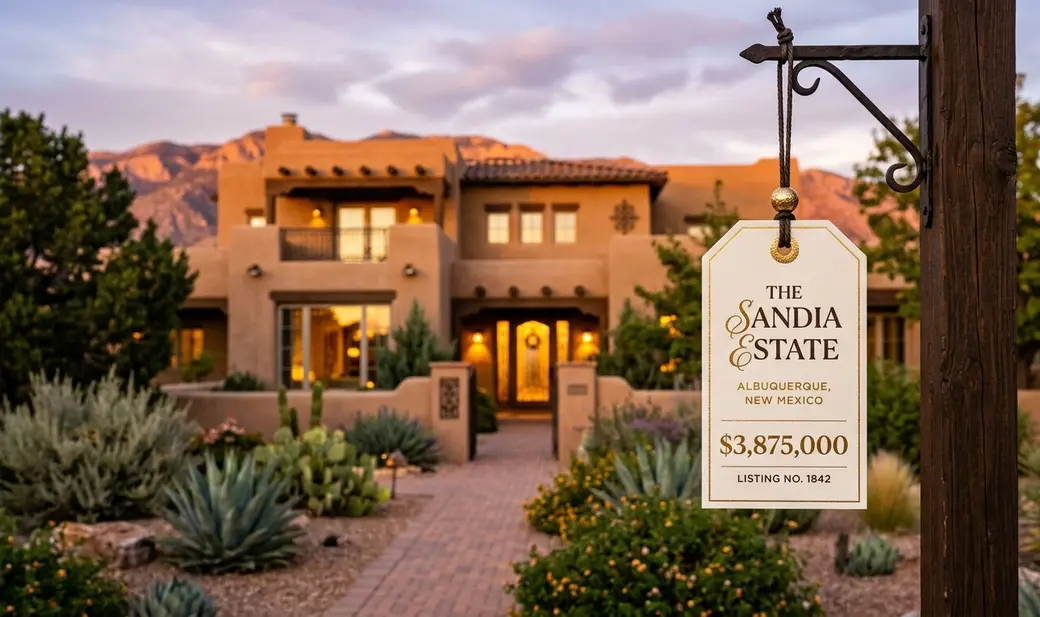
When it comes to selling a home, few decisions are more important than setting the right price.
Many homeowners believe that pricing their home is simply a matter of choosing a number they feel comfortable with or adding a little extra room for negotiation. In reality, pricing is both an art and a science.
Price your home too high, and you may discourage buyers from even scheduling a showing.
Price it too low, and you risk leaving money on the table.
The goal is to find the sweet spot—a price that attracts serious buyers, generates strong interest, and helps you achieve the best possible outcome.
If you're preparing to sell your home in Albuquerque, here's what you need to know about creating an effective pricing strategy.
Why Pricing Matters More Than Ever
Today's buyers have access to more information than ever before.
With a few clicks, buyers can:
- Compare similar homes
- Review recent sales
- Track price reductions
- Analyze neighborhood trends
- Estimate monthly payments
Because buyers are so informed, an overpriced home often stands out immediately.
Even in a strong seller's market, buyers tend to recognize when a home is priced significantly above comparable properties.
The first few weeks on the market are often the most important because that's when your listing receives the highest level of attention from active buyers.
If the home enters the market at the wrong price, you may miss valuable opportunities during this critical period.
Understand What Determines Your Home's Value
Many factors influence what buyers may be willing to pay for your property.
Location
Location remains one of the most significant drivers of value.
In Albuquerque, pricing can vary substantially depending on the neighborhood.
Factors that often influence value include:
- School districts
- Commute times
- Nearby amenities
- Mountain views
- Access to parks and trails
- Neighborhood desirability
Two homes with similar features may have very different values simply because of their location.
Size and Layout
Buyers evaluate:
- Square footage
- Number of bedrooms
- Number of bathrooms
- Functional floor plans
- Storage space
A well-designed home often feels more valuable than a larger home with an awkward layout.
Condition
The overall condition of your home significantly impacts pricing.
Buyers often pay more for homes that are:
- Move-in ready
- Well maintained
- Updated
- Clean and organized
Homes requiring significant repairs may need to be priced more competitively.
Updates and Improvements
Certain improvements may increase buyer appeal, including:
- Updated kitchens
- Modern bathrooms
- New flooring
- Energy-efficient windows
- Refrigerated air
- Solar systems
- Updated roofing
However, not every improvement produces a dollar-for-dollar return.
Pricing should reflect market value rather than the amount spent on renovations.
The Importance of Comparable Sales
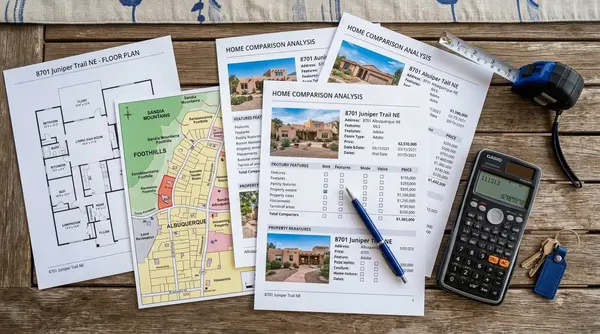
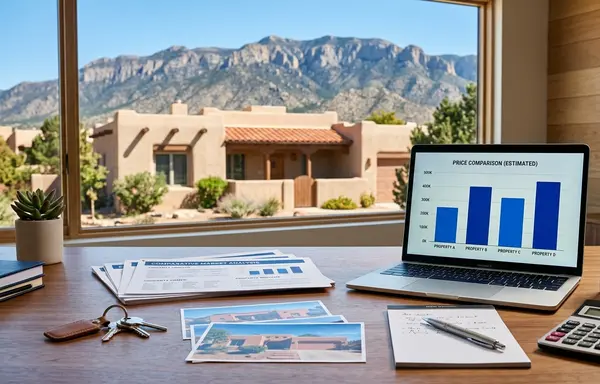
One of the most reliable methods for determining value is reviewing comparable sales, often called "comps."
Comparable homes generally share similar:
- Location
- Size
- Age
- Condition
- Features
Recent sales provide insight into what buyers have actually been willing to pay.
This is important because:
List Prices Reflect Expectations
Sold Prices Reflect Reality
A home may be listed at one price but ultimately sell for more or less depending on market conditions and buyer demand.
Reviewing recent Albuquerque sales helps create a realistic pricing strategy.
Avoid Emotional Pricing
For many homeowners, their property represents years of memories and hard work.
It's natural to feel emotionally connected to your home.
However, buyers evaluate homes differently.
They focus on:
- Features
- Condition
- Location
- Price
- Competition
Buyers generally do not place additional value on:
- Personal memories
- Sentimental attachments
- The amount of effort invested over the years
Successful sellers learn to separate emotional value from market value.
The Risks of Overpricing
One of the most common mistakes sellers make is pricing too high at launch.
Many assume:
"We can always lower the price later."
While technically true, overpricing often creates challenges.
Potential consequences include:
Fewer Showings
Buyers may skip your home entirely if they perceive it as overpriced.
Longer Time on Market
Homes that sit too long often raise questions among buyers.
Reduced Buyer Interest
Buyers may assume there is a hidden issue if a property remains available for an extended period.
Multiple Price Reductions
Repeated reductions can weaken negotiating leverage.
Lower Final Sale Price
Ironically, many overpriced homes eventually sell for less than they might have if priced correctly from the beginning.
Can Pricing Too Low Be a Problem?
Yes.
Although competitive pricing often attracts buyers, underpricing can also create challenges.
Potential risks include:
- Leaving equity behind
- Attracting only bargain shoppers
- Creating unnecessary financial loss
The goal isn't simply to generate activity.
The goal is to maximize value while attracting qualified buyers.
Albuquerque-Specific Factors That Influence Pricing
Every market has unique characteristics.
In Albuquerque, buyers often pay close attention to:
Mountain Views
Properties with Sandia Mountain views often command additional interest.
Refrigerated Air
As temperatures rise during summer months, refrigerated air can be a significant selling feature.
Outdoor Living Spaces
Many buyers value:
- Covered patios
- Outdoor kitchens
- Landscaped backyards
- Entertaining areas
Energy Efficiency
Features such as:
- Solar panels
- Updated insulation
- Energy-efficient windows
Can increase buyer appeal.
Neighborhood Reputation
Certain neighborhoods consistently attract strong buyer demand due to lifestyle, schools, amenities, and location.
Monitor Your Competition
Pricing should never happen in a vacuum.
In addition to reviewing sold properties, sellers should also evaluate active listings.
Ask:
- What homes are buyers comparing against mine?
- How does my property differ?
- What features justify a higher or lower price?
- How quickly are competing homes selling?
Buyers rarely evaluate a home in isolation.
They compare multiple options before making decisions.
The First Two Weeks Matter Most
When a home first hits the market, it receives the greatest exposure.
This period often produces:
- The highest showing activity
- The strongest buyer interest
- The best opportunity for competitive offers
Pricing correctly from day one allows sellers to capitalize on this momentum.
Waiting too long to adjust an unrealistic price can make it difficult to regain buyer attention later.
Signs Your Home May Be Overpriced
After listing, pay attention to market feedback.
Potential warning signs include:
- Few showings
- No offers
- Consistent negative feedback about price
- Similar homes selling while yours remains available
- Declining online engagement
If multiple indicators appear, a pricing adjustment may be necessary.
Why a Professional Market Analysis Matters
Online home value estimates can provide a starting point, but they often fail to account for important details such as:
- Interior condition
- Recent upgrades
- Unique features
- Neighborhood nuances
- Local buyer demand
A professional market analysis considers:
- Recent sales
- Active competition
- Market trends
- Property-specific characteristics
This information helps sellers make informed pricing decisions.
Real-Life Example
Seller A
Lists their home significantly above market value.
Results:
- Limited showings
- Extended time on market
- Multiple price reductions
- Lower final sale price
Seller B
Uses current market data and prices strategically from the beginning.
Results:
- Strong buyer interest
- More showings
- Competitive offers
- Faster sale
Result:
Better overall selling experience and stronger market performance.
Final Thoughts
Pricing your home correctly in Albuquerque's real estate market is one of the most important decisions you'll make as a seller.
The right price can:
- Generate more interest
- Attract qualified buyers
- Reduce time on market
- Improve negotiating power
- Maximize your final sale price
Rather than focusing on the highest possible number, focus on a pricing strategy that reflects current market conditions, recent sales, buyer expectations, and your home's unique features.
A well-priced home often creates momentum that leads to a smoother and more successful transaction.
FAQs
How do I determine my home's value in Albuquerque?
A professional market analysis that reviews recent comparable sales, active listings, and local market trends is one of the most accurate ways to estimate value.
Is it better to price high and negotiate down?
In many cases, overpricing can reduce buyer interest and lead to a longer time on market.
What if my home has upgrades?
Upgrades can increase value, but not all improvements provide a full return on investment. Pricing should reflect what buyers are willing to pay in the current market.
How often should I adjust the price if my home isn't selling?
The answer depends on showing activity, buyer feedback, and market conditions. Monitoring market response is essential.
Do online home value estimates accurately determine pricing?
Online estimates can provide a rough starting point, but they often miss important property-specific and neighborhood factors.
Categories
Recent Posts

GET MORE INFORMATION