
How to Compare Homes and Make a Confident Decision
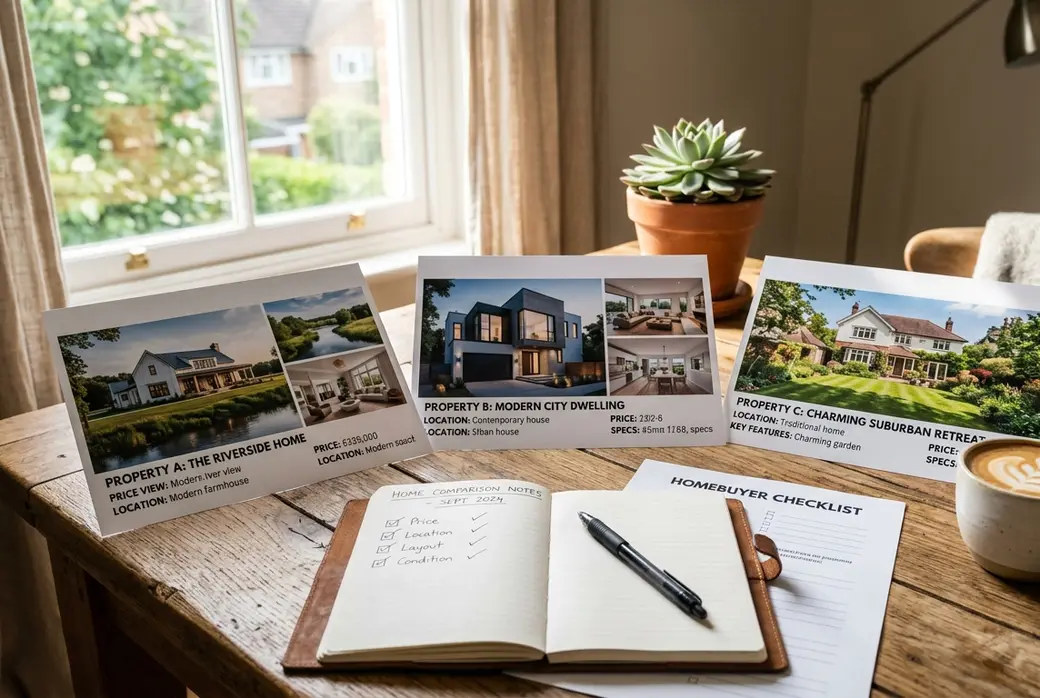
At some point in your home search, you’ll reach a stage where the excitement shifts.
Instead of wondering “Could I see myself living here?” you start asking a more difficult question:
“Which one is actually the right choice?”
This is where many buyers begin to feel overwhelmed.
You’ve likely seen several homes. Each one has something you like. One has a great kitchen. Another has the right location. A third feels like better value. Suddenly, everything starts blending together, and making a clear decision becomes harder than expected.
The truth is, comparing homes isn’t just about which one looks the best. It’s about understanding how each property fits your lifestyle, budget, and long-term goals.
If you approach it the right way, you can move from confusion to clarity—and make a decision you feel good about long after closing day.
Step Back From Emotion and Revisit Your Original Goals
One of the biggest challenges in comparing homes is emotion.
It’s easy to become attached to a property based on how it feels in the moment. A bright kitchen, a quiet street, or a beautifully staged living room can all create a strong first impression.
But when you’re comparing multiple homes, emotion alone can make everything feel equal—or worse, make the “wrong” home seem like the best choice.
Start by going back to your original goals.
Ask yourself:
- What did I actually need in a home?
- What were my must-haves?
- What was my budget?
- What lifestyle am I trying to create?
This step helps reset your perspective so you’re not comparing homes based on feelings alone, but on real priorities.
Compare Homes Based on the Features That Actually Matter
Not all features carry the same weight.
A fresh coat of paint might be nice, but it shouldn’t outweigh structural quality or location. A trendy kitchen might catch your attention, but it shouldn’t override long-term livability.
A helpful way to compare homes is to group features into categories:
Non-Negotiables (Must-Haves)
These are deal-breakers if missing.
- Location
- Budget
- Number of bedrooms
- Commute requirements
- Layout needs
If a home doesn’t meet these, it usually shouldn’t stay in serious consideration.
High-Impact Features
These strongly affect daily life.
- Floor plan flow
- Natural light
- Storage space
- Kitchen functionality
- Yard size and usability
These features often separate a “good” home from a “great” one.
Cosmetic Features
These are easier to change over time.
- Paint colors
- Flooring style
- Cabinet finishes
- Light fixtures
- Landscaping details
Cosmetic updates can improve a home, but they shouldn’t outweigh structural strengths or location.
Look Beyond the Listing Price
One of the most common mistakes buyers make is comparing homes based only on price.
On paper, two homes may seem similar—but their real value can be very different.
When comparing homes, consider:
- Property condition
- Age of major systems (roof, HVAC, plumbing)
- Upgrades and renovations
- Lot size and usability
- Neighborhood demand
- Future resale potential
A slightly higher-priced home may actually be the better financial decision if it requires fewer repairs or holds value better over time.
Evaluate the Neighborhood as Closely as the House
A home doesn’t exist in isolation.
The surrounding neighborhood will impact your daily experience just as much as the property itself.
When comparing homes, think about:
- Commute time
- Traffic patterns
- Noise levels
- Access to amenities
- Walkability
- Future development
In Albuquerque, even a short distance between neighborhoods can create a very different lifestyle experience.
A home that feels slightly less exciting may actually offer a much better long-term living situation depending on location.
Compare Long-Term Value, Not Just Immediate Appeal
A home can feel perfect today but may not age well for your needs.
When comparing options, ask:
- Will this home still work for me in 5–10 years?
- Is there room to grow or downsize within the property?
- Will maintenance costs increase significantly over time?
- Is this neighborhood likely to stay in demand?
Some homes feel exciting because they are “move-in ready,” but others may offer better long-term stability or appreciation potential.
Pay Attention to Condition, Not Just Appearance
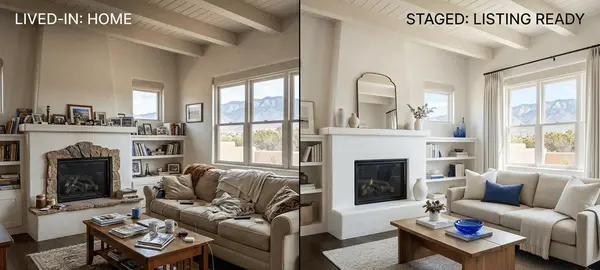
Staging and presentation can heavily influence how a home feels.
A beautifully staged home may seem more appealing than a better-built home that hasn’t been updated.
That’s why it’s important to separate presentation from condition.
Look closely at:
- Roof condition
- HVAC system age
- Windows and insulation
- Plumbing and electrical systems
- Foundation and structural integrity
Cosmetic appeal can change quickly. Structural condition is what truly affects long-term ownership costs.
Imagine Your Daily Life in Each Home
One of the simplest but most powerful comparison tools is visualization.
Instead of asking “Which home looks better?” ask:
- Where would I drink my morning coffee?
- How would I use the kitchen daily?
- Is the layout comfortable for my routine?
- Does the space feel practical or just pretty?
A home should support your everyday life, not just impress you during a showing.
Avoid Decision Overload
It’s common for buyers to reach a point where everything starts to blur together.
Too many showings in a short time can make it harder to distinguish between homes.
When this happens:
- Take breaks between showings
- Revisit your top choices
- Review notes and photos
- Limit new showings temporarily
Clarity often comes from stepping back, not looking at more homes.
Trust Data, Not Just Feelings
While emotions are important, data provides grounding.
Look at:
- Recent comparable sales
- Days on market
- Price reductions
- Neighborhood trends
- Inspection findings (if available)
A home should feel right emotionally, but it should also make sense financially.
Work With a Local Expert Who Can Help You Compare Objectively
An experienced Albuquerque real estate professional can help you see things more clearly by:
- Pointing out differences you may overlook
- Providing market context
- Breaking down pricing vs. value
- Helping you weigh trade-offs
- Keeping your decision aligned with your goals
Sometimes an outside perspective is what turns uncertainty into confidence.
A Simple Way to Make the Final Decision
When you’re down to your final choices, simplify the process:
Ask yourself:
- Which home meets my must-haves best?
- Which one fits my budget most comfortably?
- Which one supports my long-term goals?
- Which one would I regret walking away from?
The “right” home usually becomes clearer when you focus on these questions instead of trying to find perfection.
Final Thoughts
Comparing homes is one of the most challenging parts of the buying process because every option has strengths and compromises.
The goal is not to find a perfect home. The goal is to find the home that fits your life best overall.
When you balance emotion with logic, prioritize what truly matters, and stay focused on long-term value, the decision becomes much easier.
Confidence doesn’t come from finding the perfect house. It comes from knowing you made a thoughtful, well-informed choice.
Frequently Asked Questions
How do I compare homes when they all feel similar?
Focus on must-haves, long-term value, condition, and location rather than cosmetic differences.
Should I always choose the lowest-priced home?
Not necessarily. The best value includes condition, location, and future costs—not just price.
What matters most when comparing homes?
For most buyers, location, layout, condition, and long-term livability matter most.
How many homes should I see before deciding?
There’s no set number, but too many can lead to confusion. Most buyers feel confident after narrowing to a few strong options.
What if I regret my decision?
Working through a structured comparison process helps reduce regret by focusing on facts, priorities, and long-term goals.
Categories
Recent Posts





GET MORE INFORMATION