
What Every Albuquerque Homeowner Should Know Before Selling
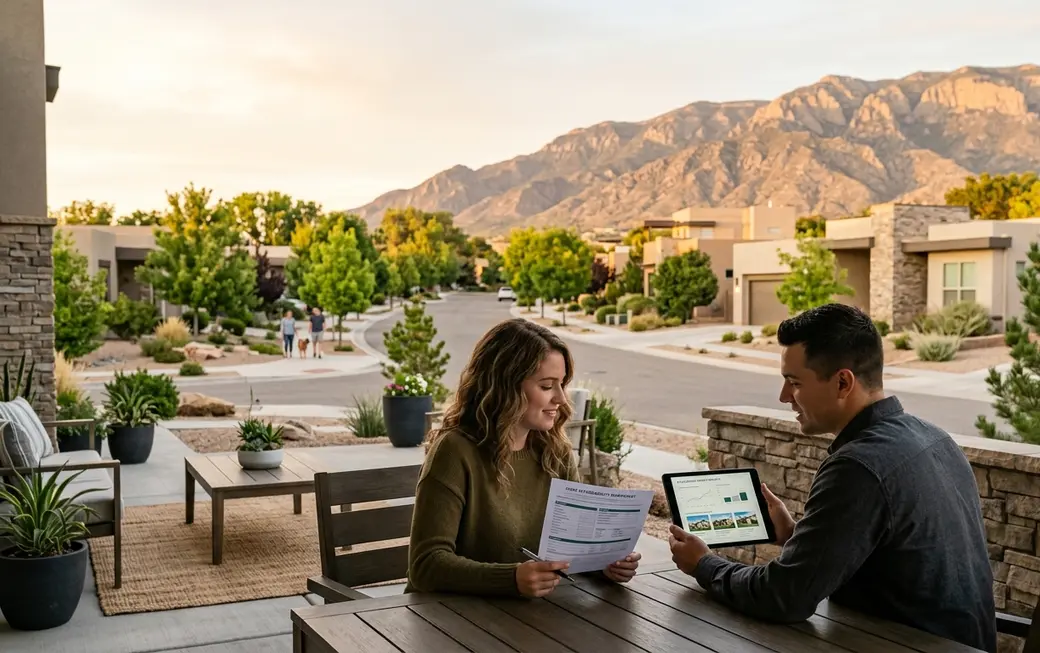
Selling your home is a big deal.
Even if you've been thinking about it for months, there's usually a moment when the decision starts to feel real.
You start wondering what your home could sell for.
You notice the paint you've been meaning to touch up.
You look around and realize you have a lot more stuff than you thought.
And then the questions start coming:
Should I make repairs before I sell?
Do I need to update my kitchen?
Is this the right time to put my home on the market?
How much will I actually walk away with?
Where will I go next?
If you're an Albuquerque homeowner thinking about selling, you don't need to have all the answers right away.
The selling process is much easier when you understand what to expect before you put your home on the market.
And after helping people navigate real estate, I've learned that selling isn't just about putting a sign in the yard.
It's about making good decisions before that sign ever goes up.
Here are some things I think every Albuquerque homeowner should know before selling.
Your Home's Value Isn't Based on What You Need to Make
This can be one of the hardest parts of selling.
Maybe you have a certain number in your head because you need enough money to buy your next home.
Maybe you've spent years improving the property.
Maybe a neighbor sold for a price that made you think, "Mine should be worth even more."
Those things are understandable.
But the market doesn't determine your home's value based on what you need from the sale.
Buyers are looking at what they can get for their money right now.
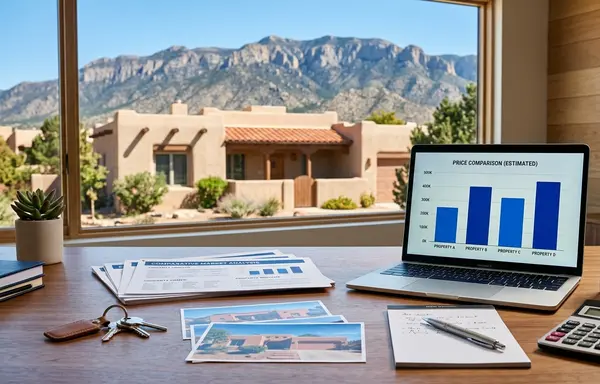
They're comparing your home with other homes currently for sale and properties that have recently sold.
They're looking at the neighborhood, condition, updates, lot size, layout, and overall appeal.
That's why pricing your home correctly is so important.
The goal isn't to choose the highest number you can imagine.
The goal is to price the home where today's buyers will see the value.
Because an overpriced home can sit.
And once a home sits on the market for too long, buyers may start wondering what's wrong with it—even when there's nothing seriously wrong at all.
Don't Assume You Need a Major Remodel
One of the first things homeowners often ask is:
"Should I remodel before I sell?"
My answer is usually: Let's look at the numbers first.
It's easy to assume that a brand-new kitchen or bathroom will automatically make your home worth significantly more.
Sometimes it can help.
But major renovations aren't always the best use of your money before selling.
Before you spend $30,000 remodeling a kitchen, ask yourself whether you're likely to get that investment back.
Sometimes, the better strategy is much simpler.
You may get more value from:
-
Touching up the paint
-
Replacing worn flooring
-
Fixing small maintenance issues
-
Updating outdated light fixtures
-
Deep cleaning
-
Decluttering
-
Improving curb appeal
-
Cleaning up the yard
You don't necessarily need to make your home look brand new.
You want it to feel cared for.
That's a big difference.
Take a Walk Through Your Home Like a Buyer
This can be surprisingly helpful.
Walk outside.
Pretend you're seeing your home for the first time.
What do you notice?
Is the front door welcoming?
Does the yard look cared for?
Is the entryway cluttered?
Are there things you've stopped noticing because you've lived with them for years?
We all get used to our own homes.
That water stain you've been meaning to paint over?
You barely see it anymore.
The squeaky door?
You don't even hear it.
The overgrown bushes?
They're just part of the landscape now.
But buyers may notice those things immediately.
Try to look at your home with fresh eyes.
Better yet, ask someone you trust to walk through with you and tell you honestly what they notice.
Sometimes a fresh perspective is all you need to identify the little things that are worth addressing.
Decluttering Is One of the Best Things You Can Do
I know.
This is probably nobody's favorite part.
But it matters.
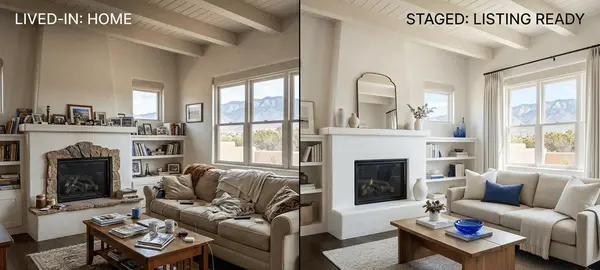
When buyers walk through your home, they need to be able to imagine their own lives there.
That's harder to do when every surface is covered and every closet is packed.
You don't have to remove everything.
Your home should still feel like a home.
But consider packing away things you don't use every day.
Start with:
-
Extra furniture
-
Overflowing closets
-
Personal collections
-
Seasonal decorations
-
Excess kitchen appliances
-
Items covering countertops
-
Clothes you haven't worn in years
The nice thing about decluttering before selling?
You're also getting a head start on moving.
And trust me, future-you will appreciate that.
Albuquerque's Outdoor Spaces Deserve Attention
If your home has a backyard, patio, covered porch, or even a small outdoor sitting area, don't overlook it.
Outdoor living is a big part of life in Albuquerque.
Buyers may picture themselves having dinner outside, enjoying a quiet morning, hosting friends, or simply sitting outside and enjoying the weather.
You don't need to spend a fortune creating an elaborate outdoor oasis.
Start with the basics.
Trim the landscaping.
Clean the patio.
Sweep the walkways.
Remove clutter.
Make the space feel usable.
If you have a great view, make sure buyers can appreciate it.
If you have mature trees, highlight them.
If your backyard is low-maintenance, let buyers know.
Sometimes the best outdoor space isn't the fanciest one.
It's the one that feels easy to enjoy.
Curb Appeal Doesn't Have to Be Complicated
Your home's first impression starts before the buyer walks through the front door.
Take a look at:
-
The front door
-
House numbers
-
Landscaping
-
Driveway
-
Walkways
-
Exterior lighting
-
Paint or stucco
-
Visible clutter
You don't need to completely transform the exterior.
Sometimes a little cleanup makes a noticeable difference.
Trim the plants.
Pull the weeds.
Clean the entry.
Add a fresh welcome mat.
Make sure the front door looks inviting.
You want buyers to pull up and think:
"I want to see this one."
Professional Photos Are Your First Showing
Most buyers will see your home online before they ever see it in person.
That means your listing photos have an important job.
They're not there to make your home look like something it isn't.
They're there to show buyers what makes your home worth seeing.
Good photography can help showcase:
-
Natural light
-
Room sizes
-
The layout
-
Outdoor spaces
-
Architectural details
-
Views
-
Updates
Think about your listing photos as the first showing.
If buyers scroll past because the photos are dark, cluttered, or poorly framed, they may never make it to the front door.
Be Ready for Buyers to Critique Your Home
This is one of the emotional parts of selling.
You may love your home exactly as it is.
Then a buyer walks through and says they hate the kitchen cabinets.
Or they don't like the carpet.
Or they think the backyard is too small.
It can be hard not to take that personally.
Try to remember that they're not judging you.
They're trying to figure out whether the home works for them.
Real estate is personal, but selling is also a business transaction.
The better you can separate your emotions from the process, the easier it becomes to make smart decisions.
And yes, you can still be proud of your home while listening to buyer feedback.
Both things can be true.
Your First Week on the Market Matters
Once your home goes live, you want to be ready.
You don't want to be scrambling to finish repairs after the listing is already active.
Before going on the market, ideally you'll have:
-
Completed important repairs
-
Finished cleaning
-
Decluttered
-
Prepared the yard
-
Taken professional photos
-
Finalized your pricing strategy
-
Established showing instructions
The goal is to launch strong.
Your home gets a lot of attention when it's new to the market.
You want buyers to see the best version of it from the beginning.
The Highest Offer Isn't Always the Best Offer
This is something I always encourage sellers to remember.
It's easy to look at two offers and immediately focus on the highest price.
But there's more to an offer than the number.
You also need to consider:
-
Financing
-
Down payment
-
Inspection terms
-
Appraisal
-
Closing timeline
-
Contingencies
-
Seller concessions
An offer that's $10,000 higher isn't necessarily better if it comes with significantly more risk or uncertainty.
The right offer is the one that makes sense for your situation.
Sometimes that means choosing the highest price.
Sometimes it means choosing a cleaner offer with stronger terms.
You want to look at the whole picture.
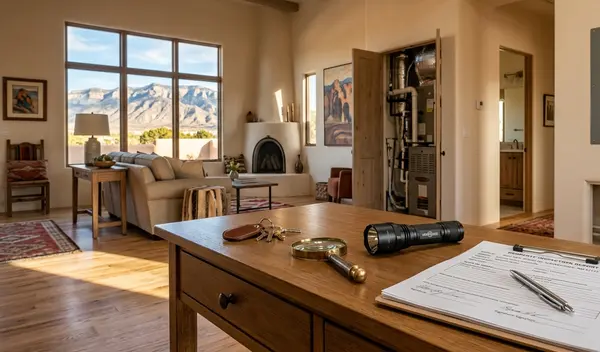
The Inspection Can Change the Conversation
Even if you've taken excellent care of your home, an inspection may uncover something.
That's normal.
Every home has a maintenance history.
And every home has something.
The inspection may point out minor repairs.
It may identify a bigger concern.
The buyer may ask for repairs or a credit.
That doesn't automatically mean the deal is falling apart.
It's part of the process.
The important thing is to understand the issue, consider your options, and respond thoughtfully.
Don't let the inspection report scare you before you understand what you're actually looking at.
Know What You'll Actually Walk Away With
This is one of the most important conversations to have before selling.
The sale price is not the same thing as your take-home amount.
Your final proceeds may be affected by:
-
Your remaining mortgage balance
-
Closing costs
-
Realtor compensation
-
Repairs
-
Seller concessions
-
Other transaction expenses
Before you list, ask for an estimated seller net sheet.
It can give you a clearer idea of what you might actually have available after the sale.
This is especially important if you're planning to use the proceeds to purchase your next home.
You don't want to make plans based on a number that's much higher than what you'll actually receive.
Think About Your Next Move Before You Sell
Selling your home is only half the story.
What happens afterward?
Are you buying another home?
Moving to a different part of Albuquerque?
Downsizing?
Relocating out of New Mexico?
Renting for a while?
Moving closer to family?
Your answer can affect how you approach the sale.
If you're buying another home, you may need to coordinate two transactions.
If you're relocating, you may need to plan your timing around a new job or move.
If you're downsizing, you may want to sell before buying.
There isn't one right way to do it.
But knowing what comes next can help you make better decisions about the sale itself.
Timing Matters, But Your Life Matters More
There will always be someone saying:
"You should sell in the spring."
Or:
"Wait until rates come down."
Or:
"This is the best market we've seen in years."
Real estate advice can get noisy.
The truth is, the best time to sell depends on your situation.
Maybe your family needs more space.
Maybe you're ready to downsize.
Maybe you're relocating.
Maybe you want to be closer to family.
Maybe you're simply ready for a change.
The market matters.
But so does your life.
If selling makes sense for your goals, you don't necessarily need to wait around for some mythical "perfect" moment.
You need a plan that works for you.
You Don't Have to List Tomorrow to Start Preparing
This is something I wish more homeowners knew.
You can start preparing long before you actually put your home on the market.
If you're thinking about selling next year, start now.
If you think you might sell in two years, that's okay too.
You can begin by:
-
Understanding your home's current value
-
Making a list of needed repairs
-
Decluttering a little at a time
-
Keeping up with maintenance
-
Thinking about your next move
-
Talking with a local Realtor about your options
There's no rule that says you have to make a decision immediately.
Sometimes the smartest thing you can do is simply gather information.
The more prepared you are, the fewer surprises you'll have later.
Selling Your Home Is Emotional—And That's Okay
Let's talk about this part for a minute.
Selling a home can bring up a lot of feelings.
You may be excited about what's next.
You may also feel sad.
You may walk into a room and remember your kids growing up.
You may look at the backyard and think about all the summer evenings you've spent there.
You may know it's time to move but still not be ready to say goodbye.
That's completely normal.
You're not selling the memories.
You're selling the property.
The memories are yours to take with you.
And sometimes, selling your home is simply the next step in your story.
Final Thoughts
If you're thinking about selling your Albuquerque home, you don't need to have everything figured out today.
You don't need to know the exact listing price.
You don't need to remodel the entire house.
And you don't need to be ready to put a sign in the yard tomorrow.
Start with a conversation.
Find out what your home might be worth.
Look at what buyers are responding to.
Talk through what repairs or updates might actually be worth doing.
Think about where you're going next.
Then make a plan.
Because selling your home isn't just about getting it on the market.
It's about making smart decisions that help you move confidently into whatever comes next.
And sometimes, the best time to start preparing isn't when you're ready to sell.
It's a little earlier—when you still have time to make thoughtful choices.
Frequently Asked Questions
How do I know if I'm ready to sell my Albuquerque home?
Start by thinking about why you want to sell, where you'll go next, your financial goals, and whether the timing fits your life. You don't have to be ready to list immediately to start exploring your options.
Should I renovate my home before selling?
Not necessarily. Some updates may help your home appeal to buyers, but major renovations aren't always worth the cost before selling. A local market analysis can help you decide which improvements are likely to make the biggest difference.
How should I price my Albuquerque home?
Your price should be based on recent comparable sales, current competition, location, condition, updates, and buyer demand. Pricing too high can cause your home to sit, while pricing strategically can help attract serious buyers.
What should I fix before selling?
Focus on noticeable issues and basic maintenance. This may include paint touch-ups, landscaping, cleaning, decluttering, and repairs that could distract buyers or raise concerns during an inspection.
How much will I actually make from selling my home?
Your net proceeds depend on your sale price minus expenses such as your remaining mortgage balance, closing costs, Realtor compensation, repairs, and seller concessions. An estimated seller net sheet can give you a better idea of what you'll take home.
How long does it take to sell a home in Albuquerque?
The timeline varies based on pricing, location, property condition, buyer demand, and current market conditions. Some homes sell quickly, while others take longer. A strong pricing and marketing strategy can help position your home for the market.
What happens if a buyer finds problems during the inspection?
Depending on the contract and the issues discovered, a buyer may request repairs, credits, or other concessions. You can review those requests and decide how you want to respond.
Categories
Recent Posts


GET MORE INFORMATION